


Associated Press, one of the world's largest news agencies, visited Zaporizhstal, a joint venture of Metinvest Group*, to report on the transformation of Ukraine's steel industry during the war with Russia and the challenges that Ukrainian steelmakers overcome every day in support of the country's victory. For the first time, we are publishing this story in Ukrainian.

AP: At Zaporizhstal, stocks of body armour have piled up, and anti-tank barriers guard the entrance. Whenever the air-raid sirens sound — and they go off every day — most employees head to one of the 16 shelters scattered across the site.
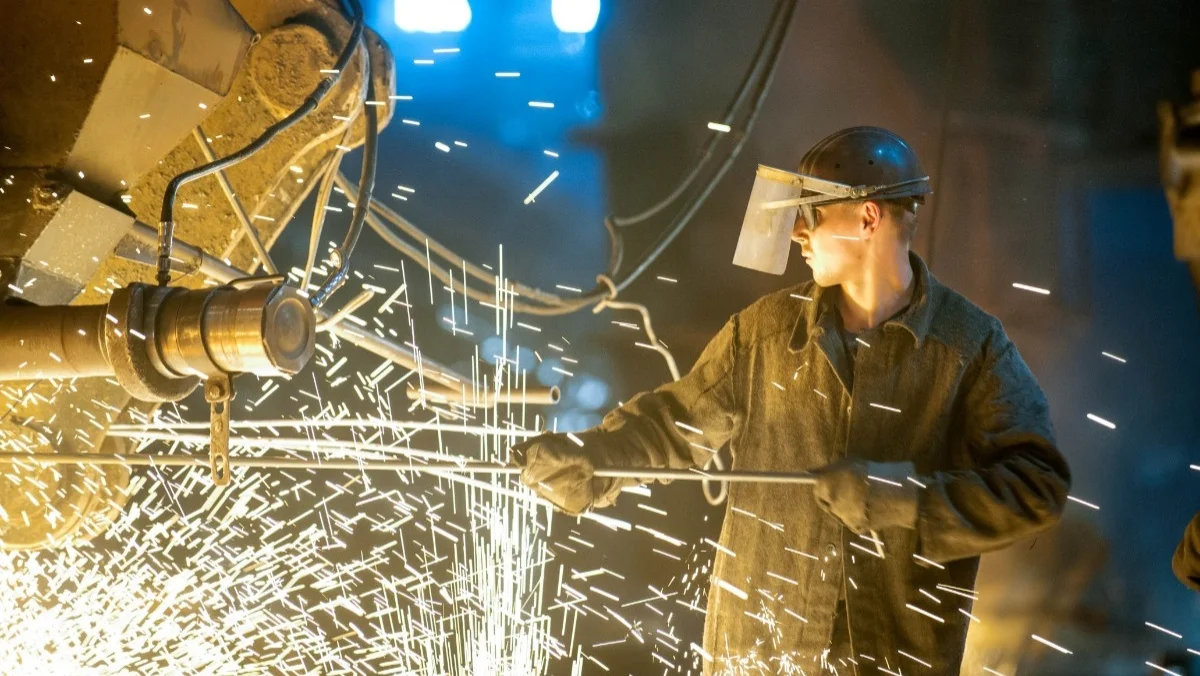
But some continue working, keeping molten metal flowing despite the intense heat, the sparks flying from the blast furnaces that produce steel for everything from railway cars to household appliances, and the threat of artillery shelling.
The city of Zaporizhzhia, from which the plant takes its name, lies less than 50 kilometres from the frontline, and its residential buildings and energy infrastructure are frequently targeted by Russian forces. The war has forced the plant to operate below full capacity, leaving a third of its more than 10,000 employees idle.
The damage to Ukraine's steel industry has dealt a blow to a profitable sector and a key employer, both vital to sustaining the war-ravaged economy. Efforts to restore production and ship goods to customers around the world will be crucial to the country's recovery.
Before the war, steelmaking was a pillar of the economy and accounted for one-third of Ukraine's exports. But that changed when Russian forces seized control of industrial centres in the Donetsk and Luhansk regions.
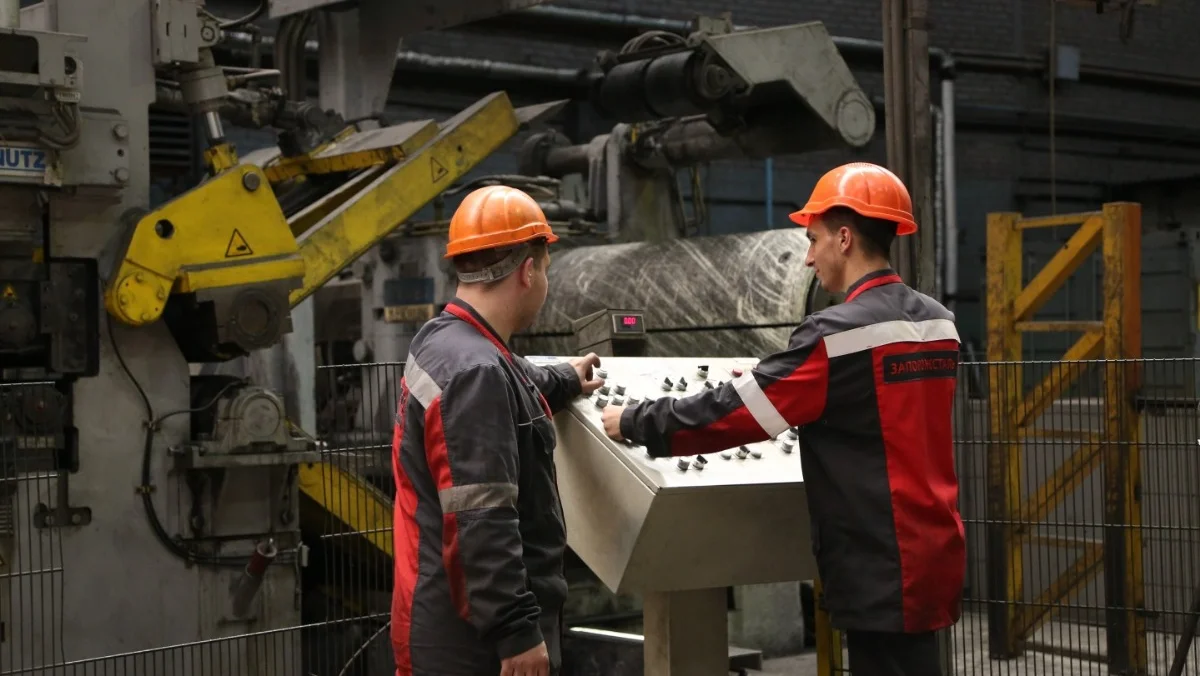
For Metinvest, a mining and steelmaking company, the slowdown at Zaporizhstal is only part of the problem. Since Russia seized Ukraine's Crimean Peninsula in 2014, the company has lost equipment and assets in regions under Russian control.
"The biggest losses we have suffered are those inflicted on Ukraine's economy. When the country is harmed, the company suffers just as much as it does from direct hits by shells," says Yuriy Ryzhenkov, CEO of Metinvest Group.
Life at Zaporizhstal still revolves around the blast furnaces, even though only three of the four are operating. A constant hissing fills the air, which is heavy with the sharp, acidic smell of sulphur released as pig iron is separated from production waste.
The workers' silver clothing reflects the dazzling light of the red-hot molten metal surging inside the blast furnace, where temperatures reach 1,500°C.
Everyone appears busy, yet the workers know that they are producing less pig iron than before the war.
"We are constrained by both the availability of raw materials and our ironmaking capacity," says Oleh Iliin, a blast furnace foreman.
Like many industrial enterprises in Ukraine, Zaporizhstal is struggling to return to normal production levels due to power supply disruptions caused by Russian missile attacks, damage to infrastructure, and the blockade of Black Sea ports.
The blockade is one of the biggest challenges facing Zaporizhstal, which has halted operations only twice in its nearly 90-year history — during the Second World War and shortly after Russia's invasion of Ukraine. Last spring, Russian forces were stopped just tens of kilometres from the plant, but nearly a year later, it has still been unable to fully recover.
Zaporizhstal's products are now more expensive, and delivering them to customers has become more difficult. Instead of being shipped by sea, orders are now transported primarily by rail, increasing not only transport costs but also production and raw material costs.
Before the war, Zaporizhstal could assemble a shipment of steel strips, used, for example, to manufacture refrigerators, and deliver it to customers within one or two months, says Roman Slobodianiuk, General Director of Zaporizhstal. Now it can take three months or more.
"Not all customers are ready for such risks. That is why we have been forced to narrow the geographic reach of our customer base," says Roman Slobodianiuk, General Director of Zaporizhstal.
Previously, Zaporizhstal worked with customers in nearly 60 countries; now, that number has halved. The war has affected the plant's ability to fulfil orders for many African countries and most countries in the Middle East.
"Before the war, approximately 90% of steel products were exported by sea because it was much cheaper," says Dmytro Horiunov of Ukraine's Centre for Economic Strategy.
The plant is now focusing on nearby European markets and the US market, where products can be shipped through Polish sea ports.
According to the Ukrmetallurgprom industry association and Oxford Economics, nearly one-third of Ukraine's steelmaking capacity has been destroyed, while output has fallen by about 65%.
Ukraine's KSE Institute has estimated that war-related losses suffered by Ukrainian businesses amount to $13 billion. In 2022, output fell by nearly one-third, and this year the Ministry of Economy forecasts growth of just 1%.
The government relies on financial support from allies such as the European Union and the United States to pay wages and pensions, avoiding the need to print money that could accelerate inflation. Last week, Ukraine received a $15.6 billion loan package from the International Monetary Fund.
Meanwhile, Metinvest is trying to recover from the loss of two major enterprises as a result of Russia's occupation, including the Azovstal, where Ukrainian forces resisted the Russian siege.
41-year-old Maksym Notchenko, a former Azovstal employee, watched from a distance as Russian forces laid siege to the plant, pounding it with strikes: "It felt as though pieces of your body had been cut off."
He managed to leave Mariupol and joined Zaporizhstal in April last year. Approximately 20,000 other Metinvest employees did the same, leaving occupied territories or joining the Armed Forces of Ukraine. Before the full-scale invasion, Metinvest employed nearly 100,000 people. Today, that figure stands at 85,000.
According to Yuriy Ryzhenkov, CEO of Metinvest, restoring supply chains, primarily by reopening Black Sea ports, would help the company recover.
"One thing about Ukrainians is that whatever happens to us, we keep working and find new ways of doing things so that we can remain effective in any situation," says Yuriy Ryzhenkov, CEO of Metinvest Group.
He says the only way to guarantee Metinvest's security and development is to liberate all territories occupied by Russia, including Crimea. That is why the company is directing resources towards supporting Ukraine's defence forces.
"Ukraine's victory will guarantee businesses the opportunity to grow," Ryzhenkov says.
*Zaporizhstal is classified as a joint venture and not as a subsidiary of Metinvest, which owns an indirect effective interest of 49.997% in the share capital of Zaporizhstal.