


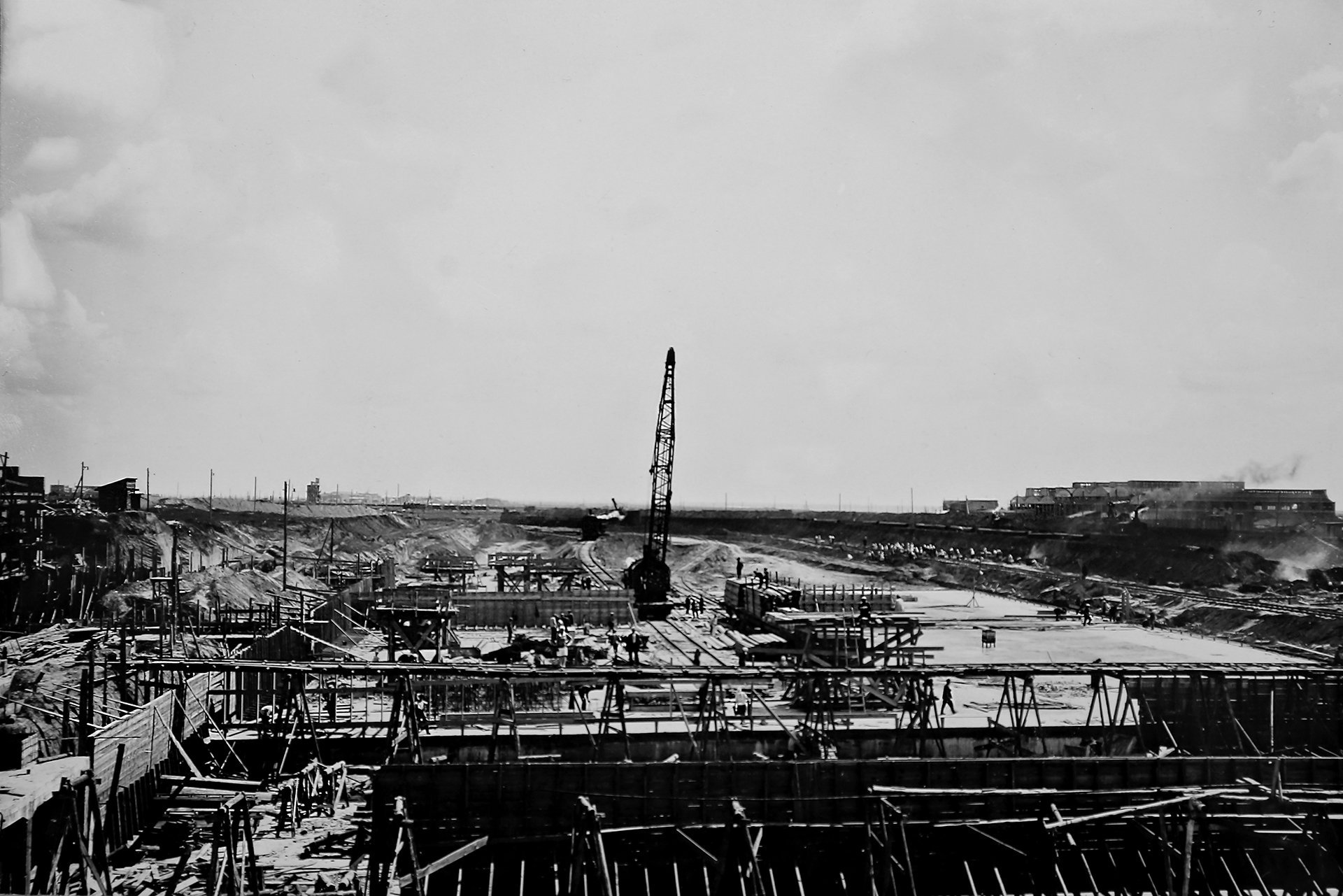
In May 1929, the country's government decided to build a large industrial complex for ferrous and non-ferrous metallurgy in Zaporizhzhia. The centrepiece of the project was the Dnipro industrial complex, which initially included a steel sheet plant, known as Zaporizhstal. Construction of Zaporizhstal began in January 1931.
On 16 November 1933, the enterprise produced its first pig iron at Blast Furnace No. 1. At the time, the furnace was the most powerful in Ukraine, with a volume of 960 cubic metres. This date is considered the birthday of Zaporizhstal steelworks.
The new plant became Europe's largest iron and steel works, with a design capacity of 1.2 million tonnes of pig iron and 1.4 million tonnes of steel.
In 1934, Blast Furnace No. 2 was commissioned at Zaporizhstal, followed by Blast Furnace No. 3 in 1938. At the time, Blast Furnace No. 3 was the largest in the world, with a volume of 1,300 cubic metres.
In 1935, the steelworks commissioned its first open-hearth furnace. It was soon followed by two more open-hearth furnaces commissioned simultaneously, another first in the global steel industry.
In 1937, the steelworks commissioned the country's first slabbing mill. It was the first not only in the country, but also in Europe, and only the third in the world.
In 1938, Zaporizhstal commissioned Europe's first continuous hot rolling mill for thin steel sheet. The new shop was unrivalled in Europe in terms of capacity and throughput.
In 1939, Cold Rolling Shop No. 1 was commissioned.
By 1940, Zaporizhstal was producing 70% of the country's steel sheet. This gave the country's agricultural machinery and automotive industries access to domestically produced thin rolled products.
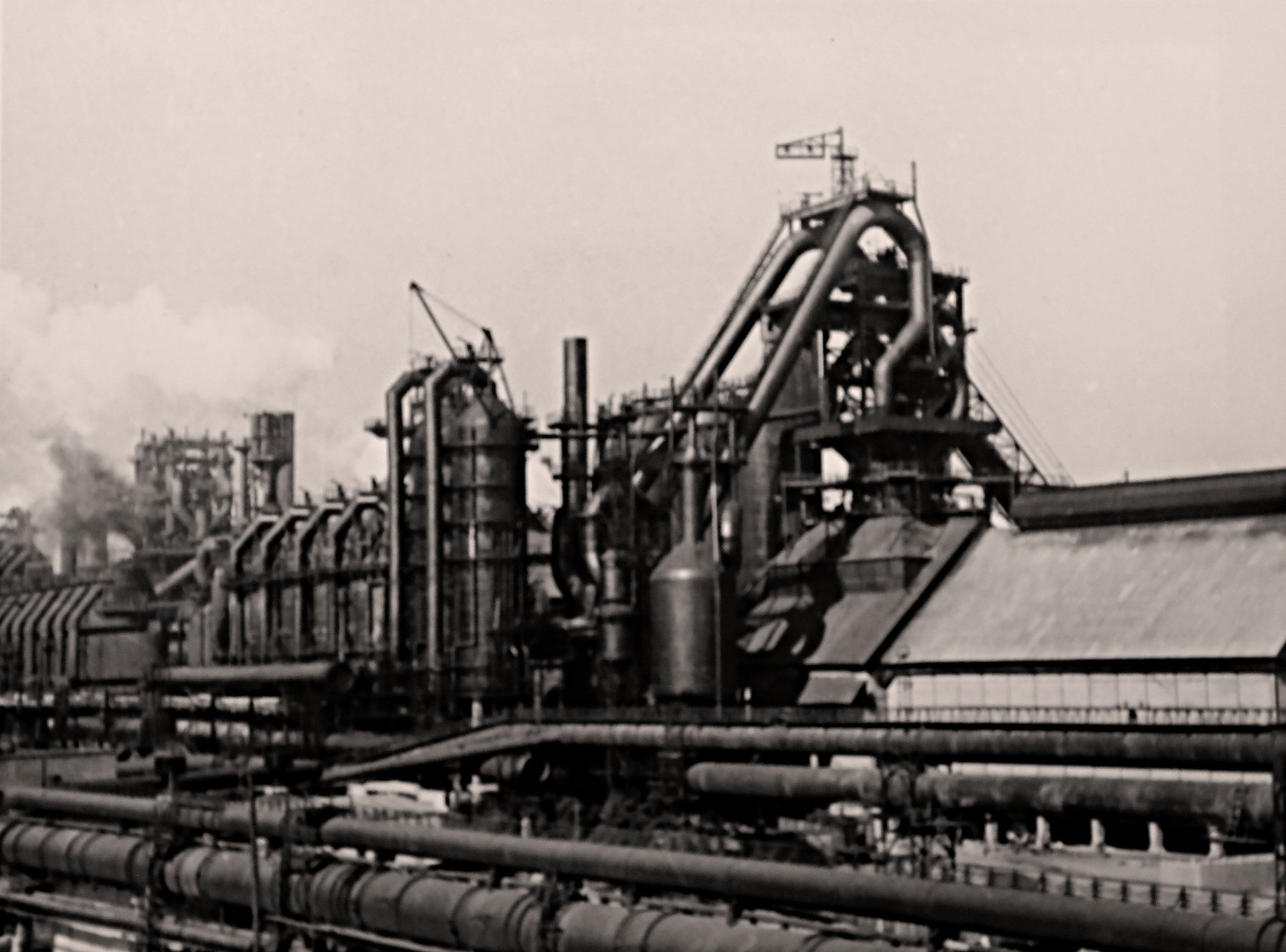
Nazi Germany's invasion of the Soviet Union in 1941, during the Second World War, interrupted the development of the steelworks. On 18 August 1941, operations at the plant were completely halted.
In October 1941, with the front line approaching, the dismantling of Zaporizhstal's main equipment was completed under extremely difficult conditions. More than 50,000 tonnes of unique metallurgical equipment were evacuated deep into the rear. The equipment was later installed at plants in Russia, where Zaporizhstal's open-hearth workers mastered the production of armour steel in high-capacity basic-roof open-hearth furnaces.
The post-war reconstruction of Zaporizhstal became a national priority. In June 1947, the rebuilt Blast Furnace No. 3 was commissioned, followed by Blast Furnace No. 4 in June 1948. The latter became the country's first all-welded blast furnace, with specialists completing the welding of its shell in just 34 days.
By December 1949, Zaporizhstal had restored its steelmaking operations and returned to pre-war production levels.
After 1945, the country's economy was in urgent need of sheet steel for the automotive industry. In July 1947, the rebuilt slabbing mill rolled its first ingots, followed by the continuous hot rolling mill in August.
In November 1948, the steelworks mastered the production of wide-strip structural sheet steel for automotive applications. The steel was used by the Gorky Automobile Plant to manufacture the first Pobeda car.
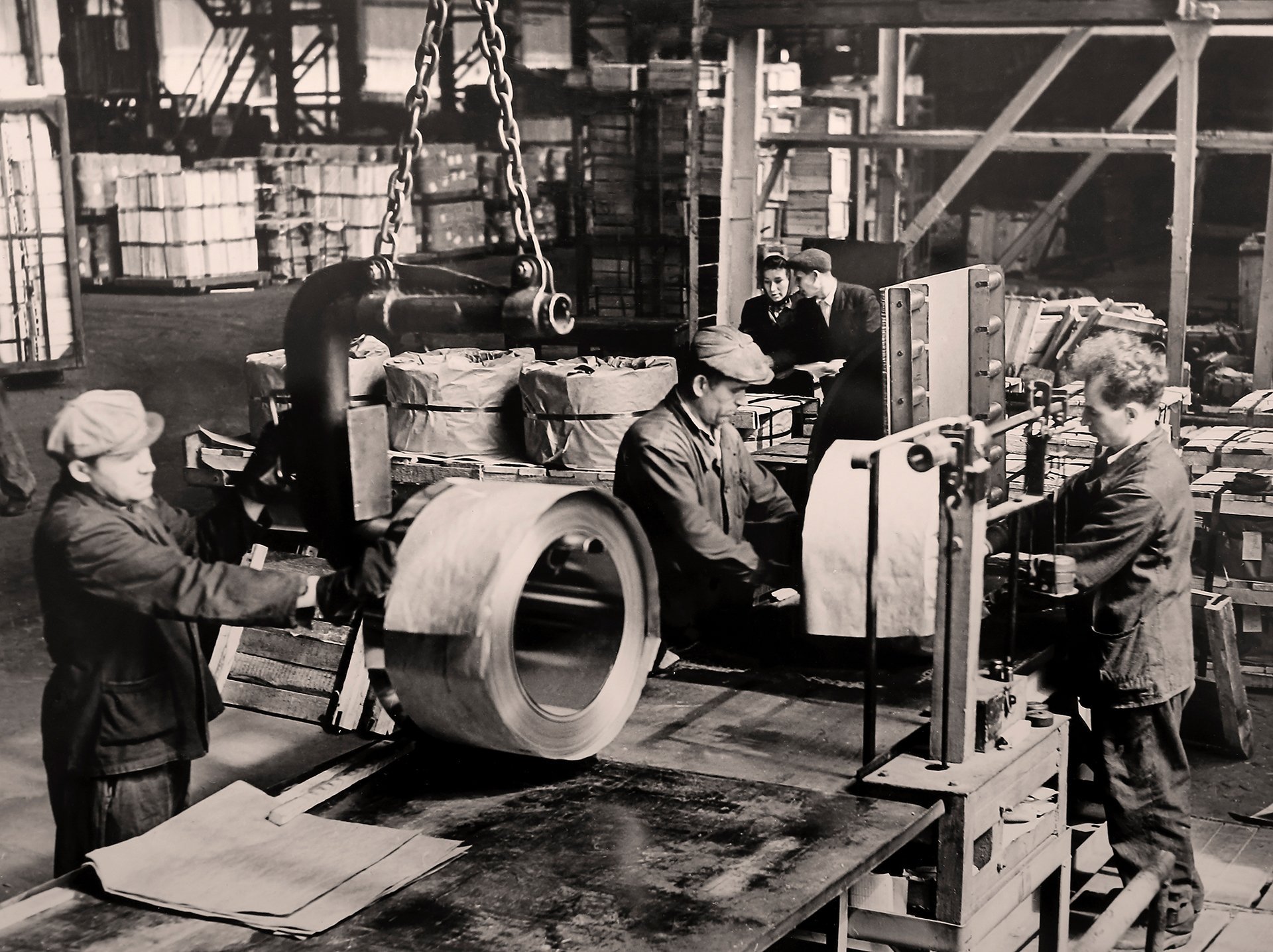
On 31 December 1950, the white tin steel production shop was commissioned. In early 1952, three-stand Mill No. 1, which produced white tin steel, reached its design capacity.
In August 1951, the sinter shop was commissioned at Zaporizhstal.
In December 1952, Zaporizhstal produced its first heats using oxygen enrichment, a first in the country.
From 1954, the steelworks began using oxygen in steelmaking on an industrial scale. This reduced the average heat time by two hours and increased steel output per square metre of furnace hearth by 100 tonnes.
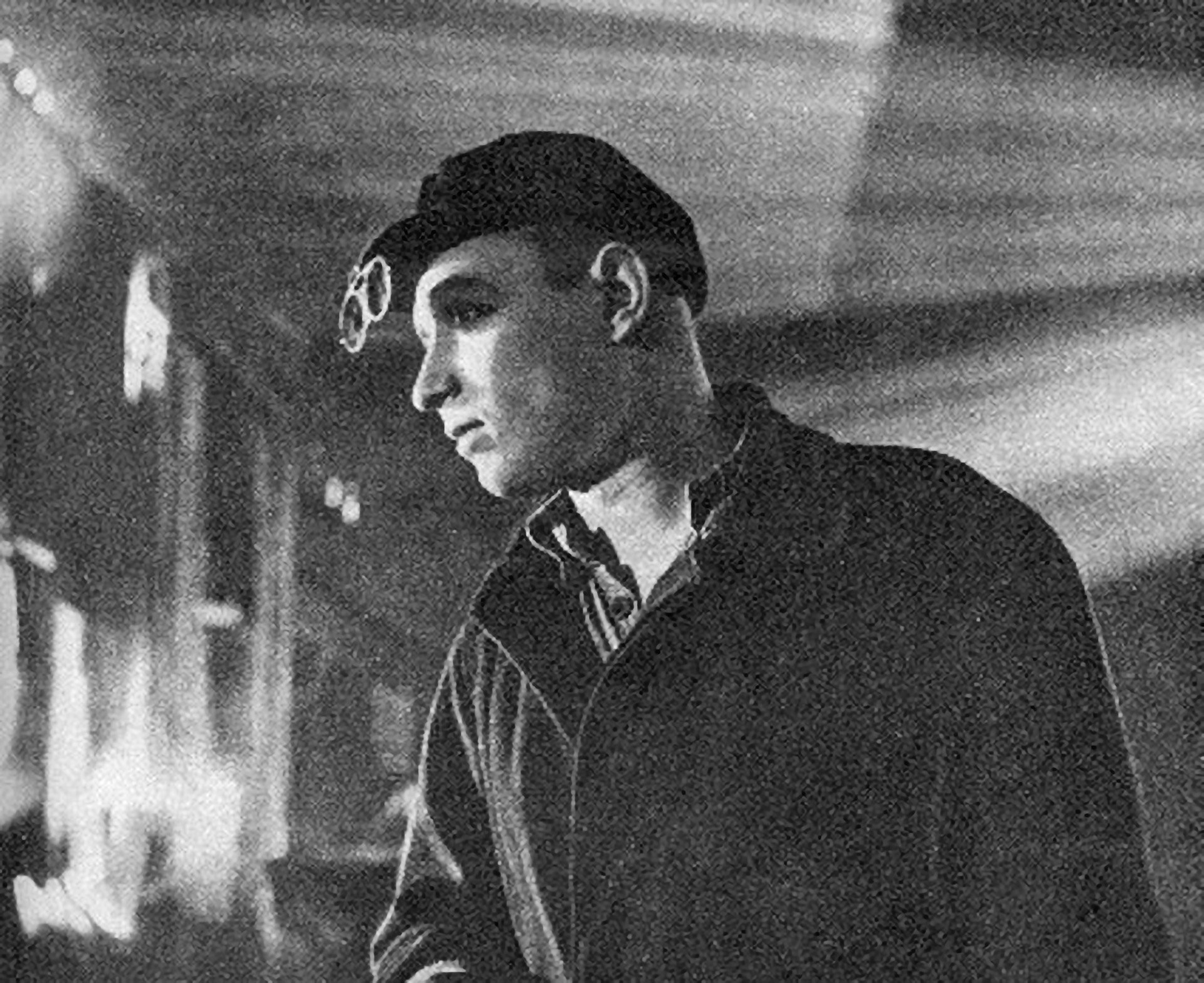
In 1956, the cult feature film Spring on Zarechnaia Street, starring actor Nikolai Rybnikov as steelworker Sasha Savchenko, was released in cinemas across the country. Parts of the film were shot at Zaporizhstal, and young Zaporizhstal steelworker Grigory Pometun helped Rybnikov prepare for the role of a steelmaker. In 1953, when Pometun was 23, he was already leading a youth team and had earned the title of Best Steelmaker of the Soviet Union. Grigory Pometun was awarded the title of Hero of Socialist Labour when he was 28.
In 1957, Zaporizhstal became the first steelworks in the country to switch its hot-rolled sheet production to coil method.
In 1959, the steelworks became the first in the country to master the production of cold-formed sections. This provided the country's engineering companies with semi-finished products that required no additional processing.
In 1960, Zaporizhstal's blast furnace operations mastered ferromanganese smelting, enabling the production of new high-strength steel grades for the first artificial Earth satellites.
In 1961, the third profile-bending mill was commissioned, followed by the new 1-4A unit in April 1966. During its first seven years of operation, the shop, the only one of its kind in the country, produced one million tonnes of cold-formed sections.
In 1962, a foundry began operations at Zaporizhstal. For the first time in global practice, flowable self-hardening moulding compounds were used to make moulds and cores. Soon afterwards, steel companies in England, France, and Japan purchased licences from the steelworks to produce these flowable self-hardening compounds.
In April 1963, the first stage of Cold Rolling Shop No. 3 was commissioned at Zaporizhstal. The 2,800 mill was used to roll large-format sheets made of stainless and complex-alloy steels.
In 1965, the steelworks' central computer technology laboratory began operations. Later, the steelworks' computing centre became the first in the country's steel industry to commission a sheet-rolling process control system that tracked the movement of metal in real time.
In 1974, Ukraine's first two-bath steelmaking furnace, DSA-1, was commissioned at the steelworks. Its productivity was 2.5 times that of conventional open-hearth furnaces.
In September 1977, the steelworks introduced a stopperless steel teeming method.
On 3 February 1978, Zaporizhstal produced its 100 millionth tonne of steel, and on 26 September, its 100 millionth tonne of pig iron since the commissioning of Blast Furnace No. 1.
On 18 June 1983, the 100 millionth tonne of rolled products was produced on Zaporizhstal's continuous four-stand rolling mill.
In the 1990s, as the national economy was taking shape, Zaporizhstal actively developed its marketing activities and worked extensively to identify new markets. By 1994, the steelworks had mastered the production of new types of hot- and cold-rolled sheet and strip for Ukraine's engineering industry.
Throughout the 1990s, the steelworks continued to modernise and automate its transport operations. In 1992, an automated wagon load weighing system was commissioned at Skhidna railway station.
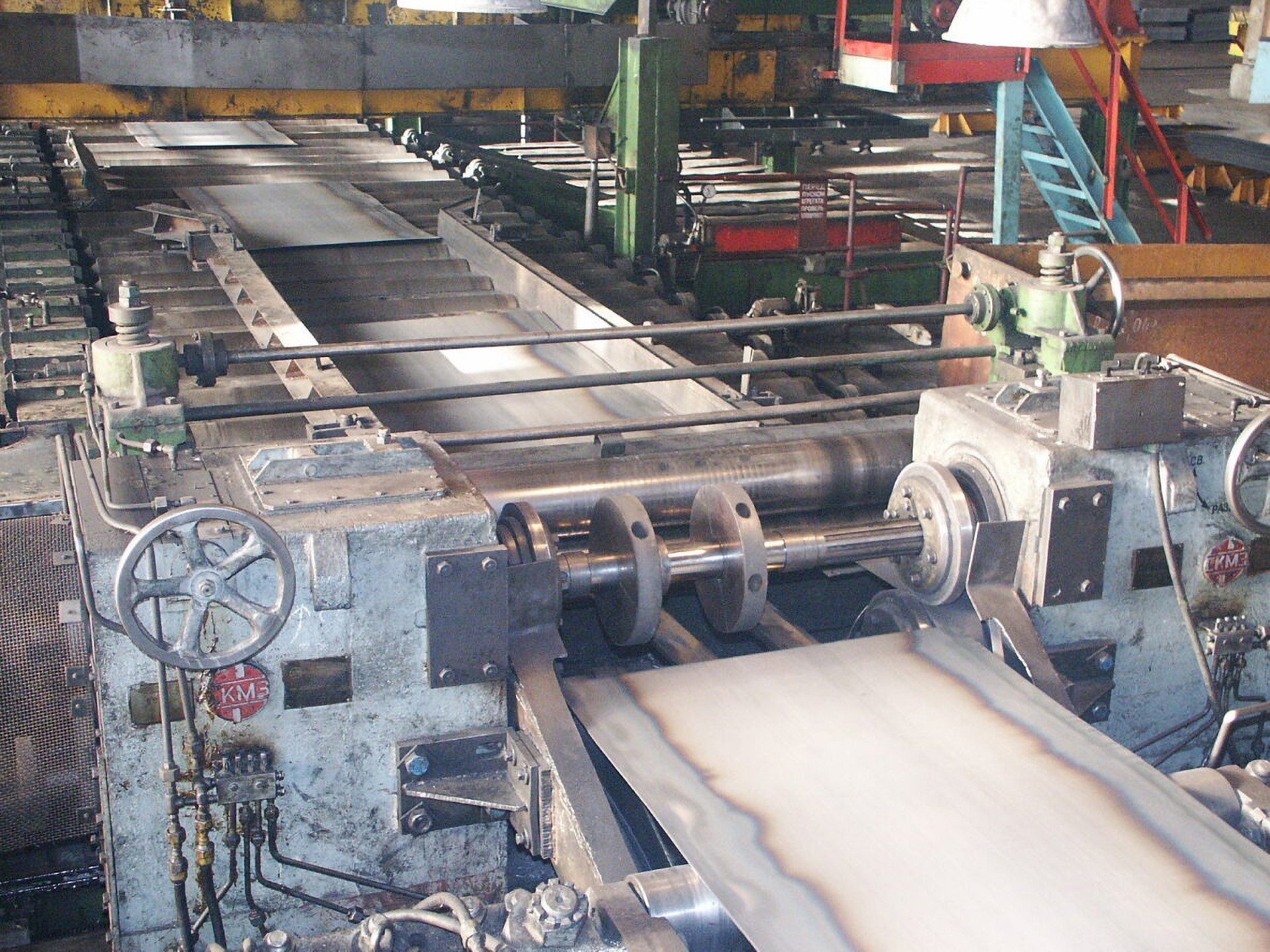
In 1994, Zaporizhstal became the first steelworks to introduce an energy-saving direct slab rolling technology on a wide-strand rolling mill, eliminating the need to preheat slabs in continuous reheating furnaces.
Using an "ingot–slab–coil" production route, in 1997–1998 Zaporizhstal became the first steelworks in Ukraine to produce a new product for the country's pipe industry: hot-rolled coils weighing up to 16 tonnes. Previously, the maximum coil weight had been eight tonnes.
In 2000, an automated control system for heating ingots in soaking pits was commissioned in the steelworks' blooming shop, marking a significant energy-saving improvement.
In 2003, the steelworks introduced a quality management system designed to bring product quality into line with international standards.
In 2004, the steelworks commissioned the rebuilt Blast Furnace No. 2, equipped with shaftless hot-blast stoves with dome burners.
In 2008, Zaporizhstal developed an Integrated Quality, Environmental and Occupational Health and Safety Management System, certified by Bureau Veritas Ukraine.
In 2008, construction began on a pulverised coal injection (PCI) facility in the steelworks' blast furnace shop. The facility was commissioned in October 2011.
In 2009, the Historical and Cultural Complex "Zaporozhzhia Sich" opened on Khortytsia Island. Zaporizhstal was the principal sponsor of its construction, investing more than UAH 12 million in the complex.
2012 marked a turning point in Zaporizhstal's further innovative development. The steelworks gained a new and effective owner, Metinvest Group.
Zaporizhstal developed and launched a programme to improve operational efficiency, modernise production, and improve working conditions and occupational safety. From August 2012, the steelworks recorded higher production volumes and increased efficiency, while reducing production costs. The steelworks achieved break-even production.
Zaporizhstal embarked on an extensive environmental modernisation of its production facilities. The steelworks consistently implemented all environmental measures under a tripartite agreement between the steelworks, Zaporizhzhia Regional Council, and the Ministry of Ecology and Natural Resources of Ukraine.
From August 2012, employees were provided with new, modern workwear and effective personal protective equipment, while industrial air-conditioning systems were installed in hot work areas in the production shops.
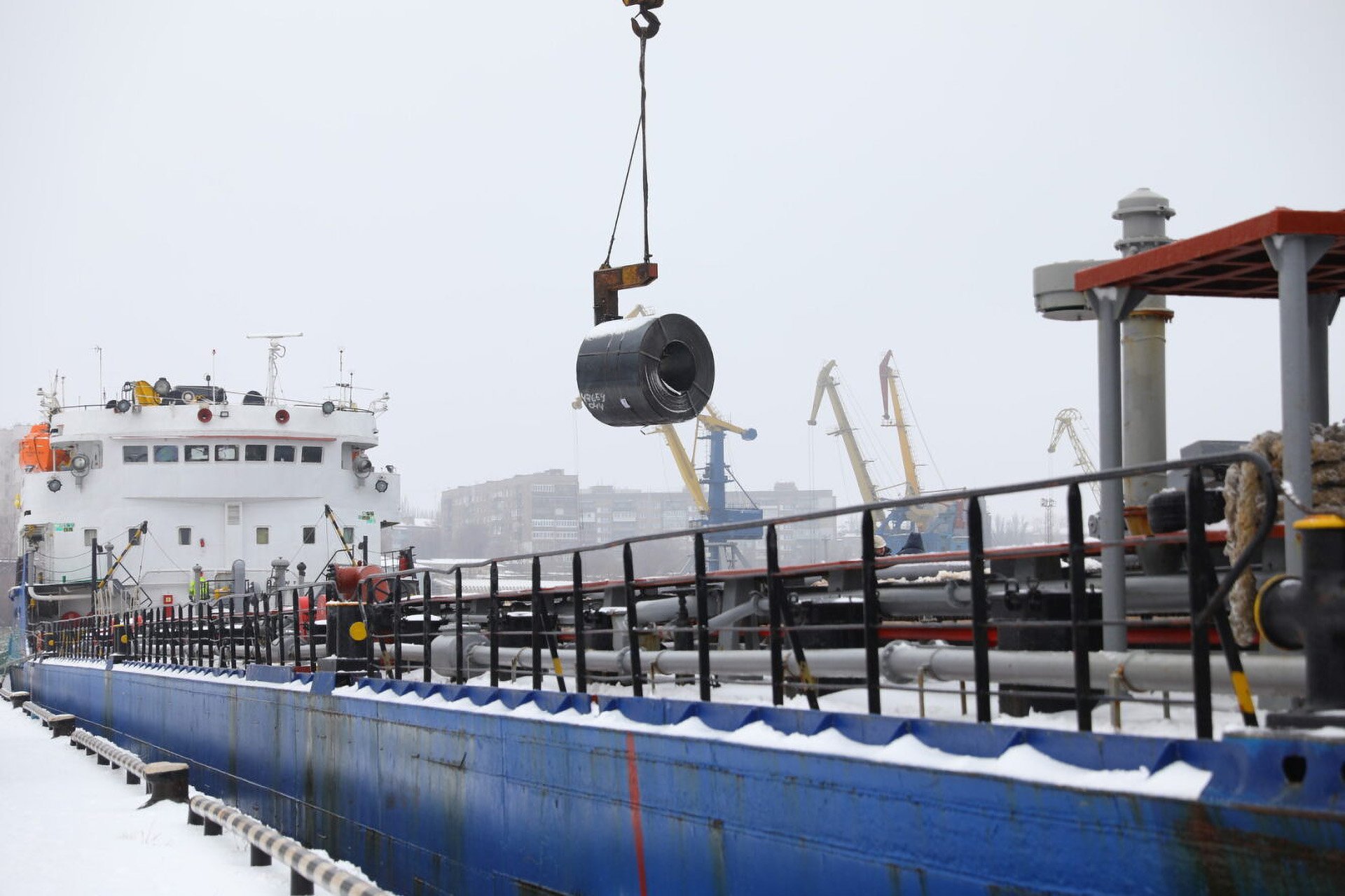
In October 2012, after a lengthy break, Zaporizhstal resumed cooperation with Zaporizhzhia River Port for the shipment of its products.
In 2012, Zaporizhstal revived the "Save the Dnipro River Together!" public environmental initiative. Over 11 years, around 1,800 trees were planted, more than 185 tonnes of waste were collected, around 190,000 fish were released into the Dnipro, 8,600 spawning grounds, 30 floating nests, and 30 bird feeders were installed. Over this period, about 10,000 people took part in the campaign.
In December 2012, a modern, high-tech base coal storage facility for the blast furnace pulverised coal injection complex was commissioned at Zaporizhstal. The total investment in the project amounted to UAH 1 billion, including UAH 350 million in the base coal storage facility.
In January 2013, Zaporizhstal signed a memorandum of cooperation with the Ukrainian Athletics Federation. The steelworks established monthly named scholarships for leading athletes from Zaporizhzhia Oblast, including Olympic champions and medallists, as well as world and European champions.
In 2013, at Zaporizhstal's initiative, the "We Are the City" social project competition was launched in Zaporizhzhia as part of Metinvest Group's corporate social programmes. Over the first seven years of the competition, 1,653 applications were submitted, of which 330 were selected as winners and received implementation grants. The competition's total budget reached UAH 23 million, which was invested in projects to improve infrastructure and promote volunteering, patriotism, culture, education, and sport in Zaporizhzhia and the surrounding region.
In May 2013, Zaporizhstal completed a major environmental project to modernise its sinter production facilities. A new equipment complex was commissioned, comprising Sinter Machine No. 1, a high-tech gas cleaning system with two high-capacity electrostatic precipitators, an exhauster station, and a compressor station. The project reduced dust and gaseous emissions into the atmosphere by up to 10% of the steelworks' total emissions. Investment in the project amounted to UAH 240 million.
In October 2013, a new production shop, the metal products shop, began operations at the steelworks. Its technical capabilities and installed equipment enabled it to produce around 1,200 tonnes of expanded metal sheet, around 300 tonnes of standard- and custom-size cold-formed sections, and 1,500 tonnes of cut-to-length hot- and cold-rolled sheet per month.
In 2014, Blast Furnace No. 4 was modernised, while a new hydrochloric acid pickling line was built in Cold Rolling Shop No. 1 and a new gas cleaning system was installed at Sinter Machine No. 2. Almost UAH 1.5 billion was invested in these projects.
In 2014, in response to the Russian Federation's military aggression in Donbas, the workforces of Zaporizhstal, Zaporizhzhia Refractories, Zaporizhcoke, and Zaporizhzhia Iron Ore Plant voiced their support for peace and social harmony, the rule of law, a strong economy, and a united Ukraine. Since then, Zaporizhstal and the Rinat Akhmetov Foundation have provided assistance to displaced families affected by the escalation of hostilities in Donbas.
In 2014, Zaporizhstal invested around UAH 4 million in the refurbishment and medical equipment of the isolation ward for young children at Children's Hospital No. 5 in Zaporizhzhia. Zaporizhzhia.
In December 2014, Zaporizhstal became one of the first steel companies in Ukraine to introduce QR coding of finished products using the SAP Mobile Inventory Management system, automating finished-product inventory and shipment processes.
In March 2015, Zaporizhstal commissioned an AMCOM slag processing complex to recycle industrial waste and reduce its environmental impact.
On 28 April 2015, a square named after Vitaliy Satskyi, who headed the steelworks for 26 years from 1986 to 2012, was officially opened on the grounds of Zaporizhstal.
In July 2015, as part of Metinvest Group's technological modernisation strategy, Zaporizhstal fully commissioned new gas cleaning equipment at Sinter Machine No. 2, with an investment of around UAH 80 million.
In November 2015, Zaporizhstal became a unique new venue for extreme BMX stunts performed by leading Ukrainian BMX rider Vasyl Lukianenko.
In December 2015, to preserve Zaporizhzhia's long-standing youth football traditions, Zaporizhstal funded the Metalurh Youth Sports School team's travel to away fixtures, provided a training ground, and supplied equipment and other essentials. From 2016 to 2019, Zaporizhstal provided UAH 32.5 million in financial support to the football school.
In January 2016, to improve production efficiency, Zaporizhstal introduced an automated GPS-based dispatching system for the steelworks' vehicle fleet.
On 1 November 2016, Zaporizhstal began a major reconstruction of Blast Furnace No. 3. Investment in the environmental modernisation project amounted to around UAH 1.5 billion.
By the end of 2016, in line with its technological strategy focused on environmental modernisation, Zaporizhstal had invested UAH 1.8 billion in the development and modernisation of its production facilities.
In 2017, the "Save the Dnipro River Together!" public environmental initiative, implemented by Zaporizhstal jointly with the Khortytsia National Reserve, the Zaporizhzhia Regional Association of Anglers and Hunters, and the Federation of Spearfishing, Diving and Fishing, won the BestinCSR competition organised by the Sustainable Business magazine, being recognised as the best public initiative in Ukraine.
On 20 May 2017, the first stage of the Zaporizhstal Drone Racing CUP 2017, an open Ukrainian drone racing competition, was held in the tin plate section of Cold Rolling Shop No. 1 at Zaporizhstal.
In 2017, the Zaporizhzhia Regional Centre for Emergency Medical Care and Disaster Medicine opened in Zaporizhzhia as part of Ukraine's healthcare reform. Under its social partnership programme, Zaporizhstal contributed UAH 12 million towards establishing the centre.
In 2017, Zaporizhstal introduced the practice of repowering its shunting diesel locomotives as an effective way of extending the service life of its own locomotive fleet, which comprised 80 diesel locomotives.
On 5 October 2017, the innovative "Campus" training centre opened at the steelworks. This marked a significant step forward in training Zaporizhstal employees in Lean Enterprise methodology and tools.
On 5 November 2017, the Half Marathon 2017 was held in Zaporizhzhia for the first time with Zaporizhstal's support, attracting 1,500 participants from across Ukraine and other countries.
In 2017, Zaporizhstal completed the reconstruction of Blast Furnace No. 3 and commissioned the rebuilt furnace. The steelworks became the first in Ukraine to develop an intelligent blast furnace model, which improved the efficiency of the reconstruction and reduced the project duration threefold, from two years to eight months. Blast Furnace No. 3 was equipped with a new dedusting system capable of reducing dust concentrations in emissions to 20 mg/m³. The furnace was reconstructed using a large-module assembly method.
On 18 December 2017, Zaporizhstal purchased a modern intensive care ambulance for emergency treatment of patients at Zaporizhzhia Children's Multidisciplinary Hospital No. 5.
In April 2018, Zaporizhstal completed a major environmental project to modernise the gas cleaning systems of Sinter Machines Nos. 1–6. Investment in the project exceeded UAH 1.2 billion.
On 28 May 2018, the large-scale "Bright Run" family sporting event was held in Zaporizhzhia for the first time with Zaporizhstal's support.
In June 2018, as part of its production equipment modernisation programme, Zaporizhstal completed a major overhaul of Blast Furnace No. 5, including modernisation work. More than UAH 200 million was invested in the overhaul.
On 28 October 2018, the 2nd Zaporizhstal Half Marathon was held in Zaporizhzhia. The event was organised by Run Ukraine, with Zaporizhstal as the title sponsor. More than 1,700 people took part in the half marathon, supported by over 5,000 spectators.
On 16 November 2018, Zaporizhstal received official confirmation of records registered by the National Register of Records of Ukraine. These recognised are the reconstruction of Blast Furnace No. 3 and the implementation of the "Save the Dnipro River Together!" public environmental initiative.
In March 2019, as part of its environmental modernisation programme, Zaporizhstal commissioned a modern industrial and stormwater collection system. The system reduced industrial wastewater discharges into the Dnipro by 5 million m³ per year. Investment in the project amounted to UAH 58.5 million.
In July 2019, Zaporizhstal completed construction of a new road along Pivnichne Highway, connecting the Zavodskyi district with the city centre. The steelworks invested UAH 220 million in the project.
On 7 July 2019, Ukraine's largest "Bright Swim" across the Dnipro was held in Zaporizhzhia with the steelworks' support. Around 1,000 athletes took part in the event.
On 15 September 2019, the large-scale Steel Cup cycling competition was held in Zaporizhzhia with the steelworks' support. More than 2,000 people took part in the road and cross-country races combined.
In 2019, Zaporizhstal reconstructed two football pitches at the training facilities of the Metalurh Youth Sports School.
In March 2020, Ukraine introduced quarantine measures in response to the coronavirus pandemic. An emergency coronavirus response team established at the steelworks developed and implemented a range of effective measures based on recommendations from the World Health Organization (WHO) and the Ministry of Health of Ukraine. These measures helped provide maximum protection for the workforce against the spread of the virus and reduce the risk to Zaporizhstal employees.
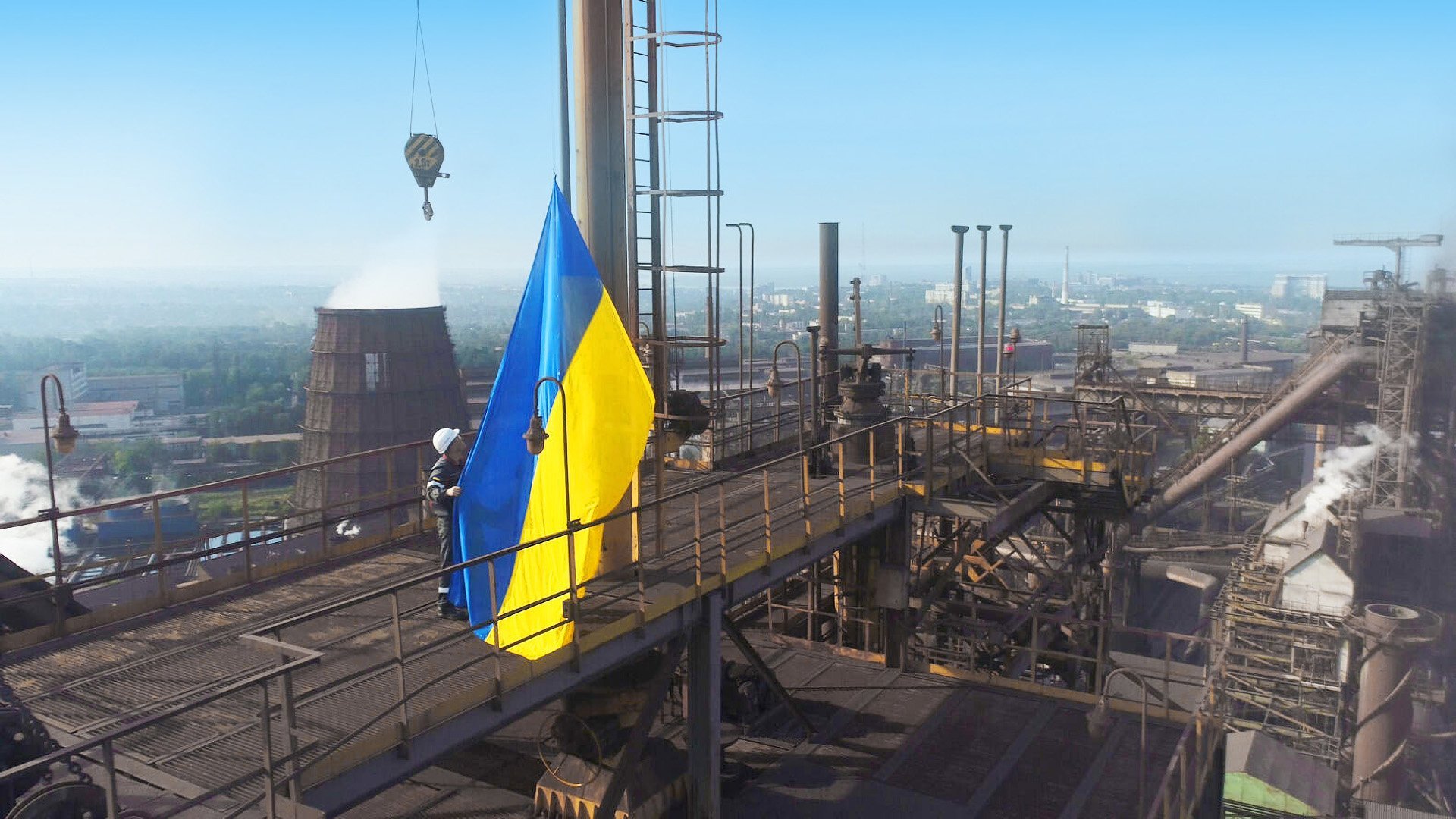
In 2020, to mark the Day of the National Flag and Independence Day of Ukraine, Zaporizhstal launched a patriotic initiative in which a 400 m² Ukrainian national flag was flown above the Dnipro. The flag was displayed on the arch bridge connecting Zaporizhzhia's residential districts with Khortytsia Island.
From 2021, Zaporizhstal became the first industrial enterprise in Zaporizhzhia to make its online environmental emissions monitoring data publicly available.
From April 2021, Zaporizhstal began supplying hospitals with medical oxygen certified by the Ministry of Health. The steelworks continues to provide medical oxygen to hospitals free of charge, with average monthly deliveries reaching 60 tonnes.
On 21 April 2021, a modern oxygen station was commissioned at Zaporizhzhia Regional Infectious Diseases Clinical Hospital. Its construction was financed by Metinvest Group's Zaporizhstal with support from the Rinat Akhmetov Foundation.
In 2021, a project was launched to revitalise Khortytsia Island, one of Zaporizhzhia's principal landmarks. The project began with the signing of a memorandum at the Zaporizhian Sich Historical and Cultural Complex between the Ministry of Culture and Information Policy of Ukraine, the Zaporizhzhia Regional State Administration, and Zaporizhstal. Metinvest fully financed the development of the reconstruction concept for the Museum of the History of the Zaporizhzhia Cossacks and the Mound of Unity on the island and provided comprehensive support for the implementation of the project.
To mark the Day of the National Flag and the 30th anniversary of Ukraine's Independence, Zaporizhstal installed a Ukrainian national flag on the cable-stayed bridge in Zaporizhzhia connecting the city's left bank with Khortytsia Island. The enormous flag was mounted on the bridge pylon at its highest point above the Dnipro, 95 metres above the water.
In December 2021, Metinvest Group's Zaporizhstal completed a major refurbishment of a ward at Zaporizhzhia Regional Infectious Diseases Clinical Hospital that had previously been damaged by fire. Around UAH 6 million was invested in the restoration work.
Russia's full-scale invasion of Ukraine, including the escalation of hostilities in the Zaporizhzhia region, forced Zaporizhstal to place some of its equipment in hot mothballing mode in March 2022. It was the first time since the Second World War that the steelworks had entered this mode. Production resumed just 33 days later.
In March 2022, a humanitarian centre was established at the steelworks to assemble food and hygiene kits as part of the "Saving Lives" humanitarian project launched by Metinvest together with international donor partners and deliver them to Ukrainians. As of February 2025, more than one million essential food and hygiene kits assembled at the hub had been distributed to Ukrainians.
In May 2023, on the instructions of Ukrainian President Volodymyr Zelenskyy, with the assistance of the Zaporizhzhia Regional Military Administration and Zaporizhzhia City Council, and in partnership with Metinvest Group and Zaporizhstal, a project was launched to rebuild a residential building damaged by enemy shelling. The socially responsible businesses allocated more than UAH 50 million to the project.
On 16 November 2023, Zaporizhstal marked its 90th anniversary. Given the state of martial law, the steelworks refused to hold mass gathering festivities in order not to expose its employees to danger.
Anniversary events were held in specially equipped protective shelters, where the steelworks' top-performing employees received well-deserved awards.
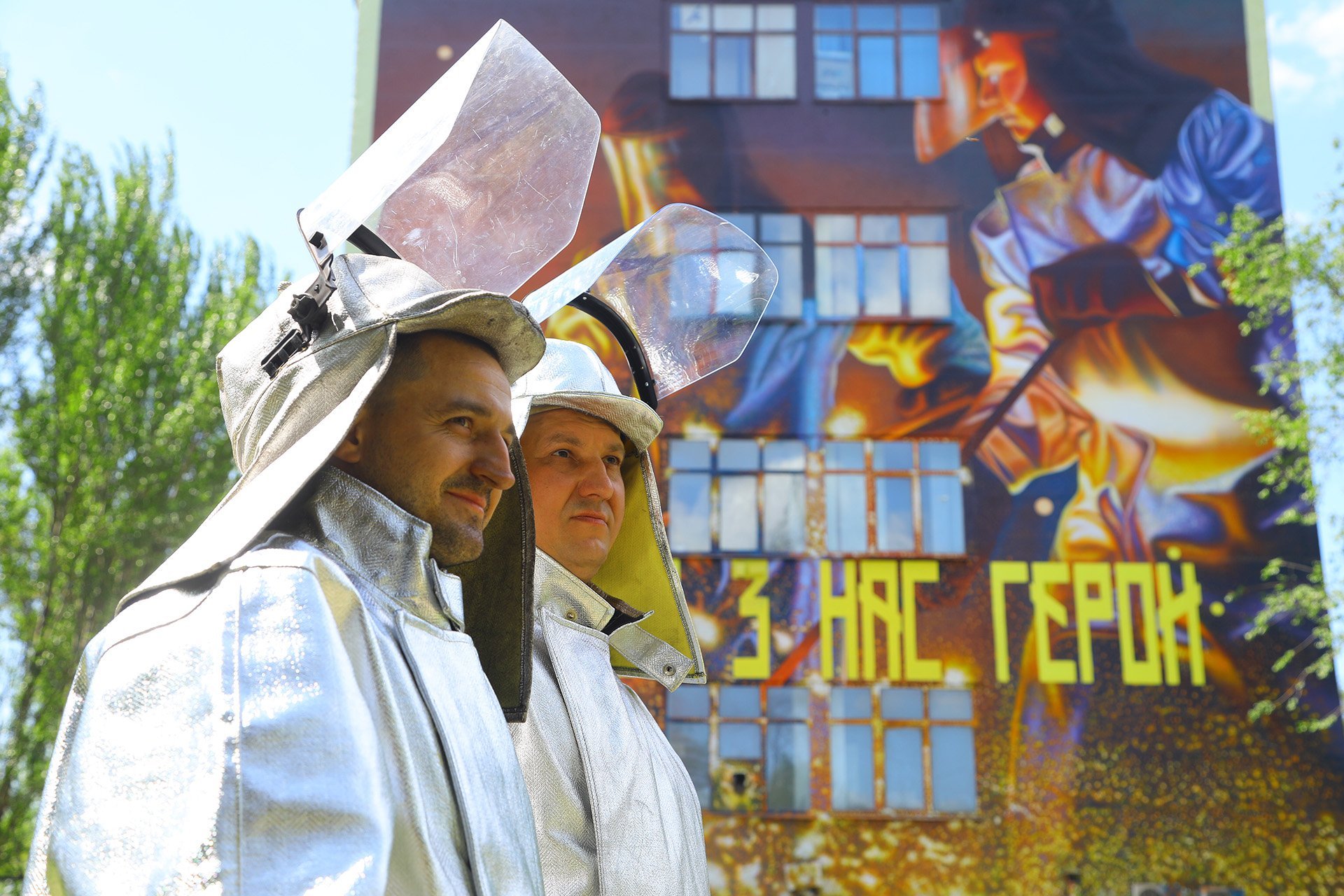
Since 2023, Zaporizhstal has been home to unique murals created by renowned Ukrainian muralist Sasha Korban as part of the "Every One of Us Is a Hero!" art project.
Zaporizhstal helps employees restore homes damaged by enemy shelling. Since the start of the full-scale war, more than 100 employees have received financial assistance totalling almost UAH 3 million to repair homes damaged by enemy shelling, as of December 2024.
At the request of emergency services and local authorities, Zaporizhstal provides assistance in dealing with the aftermath of enemy shelling. The steelworks provides machinery and specialists to help clear debris.
Since July 2024, the Free Waves rehabilitation project for war veterans and military personnel has been operating in Zaporizhzhia with the support of Metinvest and Zaporizhstal.
In October 2024, Metinvest and Zaporizhstal supported the creation of the "Tree of Memory" memorial to Ukraine's fallen Defenders in Zaporizhzhia. The nine-metre iron tree symbolises the enduring memory of Ukraine's steel-strong warriors who gave their lives fighting for a free and independent Ukraine.
In 2024, Zaporizhstal allocated almost UAH 940 million to maintain its production facilities. The programme focused on equipment maintenance and modernisation and the implementation of functional programmes covering occupational health and industrial safety, information technology, and social initiatives.
Zaporizhstal and other Metinvest enterprises in Zaporizhzhia operate the "Hero's Path: Ecosystem for Integrating Veterans" project. As part of the programme, over 300 war veterans have already returned to their workplaces after demobilisation.
Zaporizhstal is a major contributor to the regional economy and one of the largest contributors to the local budget. Zaporizhstal is a driver of sustainable development in the Zaporizhzhia region. With Zaporizhstal's support, projects in culture, education, sport, patriotic education, urban improvement, and volunteering are implemented in Zaporizhzhia. The steelworks supports the city's healthcare institutions and helps strengthen critical urban infrastructure.
Zaporizhstal and every one of its employees are committed through their work to strengthening Ukraine's economic front, protecting their home city and its residents, and helping those who need it most. This unity brings us closer to our shared Victory.