


At the Zaporizhstal steelworks, Metinvest Group's joint venture in Zaporizhzhia, steel is produced under the threat of enemy air strikes. Report of the leading French media outlet - RFI from Zaporizhzhia.

The war-affected Ukrainian steel industry remains one of the most important sectors of the country's economy. It is also mobilising its resources to contribute to Ukraine's victory in the war. Some forty kilometres from the front line, in a partly occupied region, one of the biggest Ukrainian steelworks, Zaporizhstal, continues to melt steel.
With a deafening clatter, an incandescent block is being thrown into rolls of the rolling mills. On the other side of the powerful machinery, rolls and thick metal plates, still smoking, are waiting to be loaded. "They will leave for Italy", says 33-year-old line manager Artem Kaliniievych, who has been working at the plant since 2009.
The Russian invasion, launched on 24 February 2022, turned production processes and logistics upside down. "At first, we did not know what to produce, we had to rethink everything. Only for Poland did the processes remain the same," he explains. Following the occupation of the shores of the Azov Sea by Russian troops and the blockade of Black Sea ports, it was imperative to find new routes for the supply of products and raw materials needed for blast furnaces. The plant lost sales markets in Asia, North Africa, and Turkey, and had to reorient itself towards Europe that is more accessible by land, according to general director Roman Slobodianiuk.
Aside from this, there are factors that arise from the closeness to the front line. Zaporizhzhia is regularly targeted by Russian fire. "Every day when the air raid siren sounds, we are afraid that our plant may come under fire," says Artem. Although the huge complex is equipped with underground shelters, specialists who work in the rolling mill, melt metal or charge steel into open-hearth furnaces, cannot leave their posts. "Production is continuous. If we suddenly stop it, that will be a dangerous situation. So, yes, we are worried, but we have to keep working," he says.
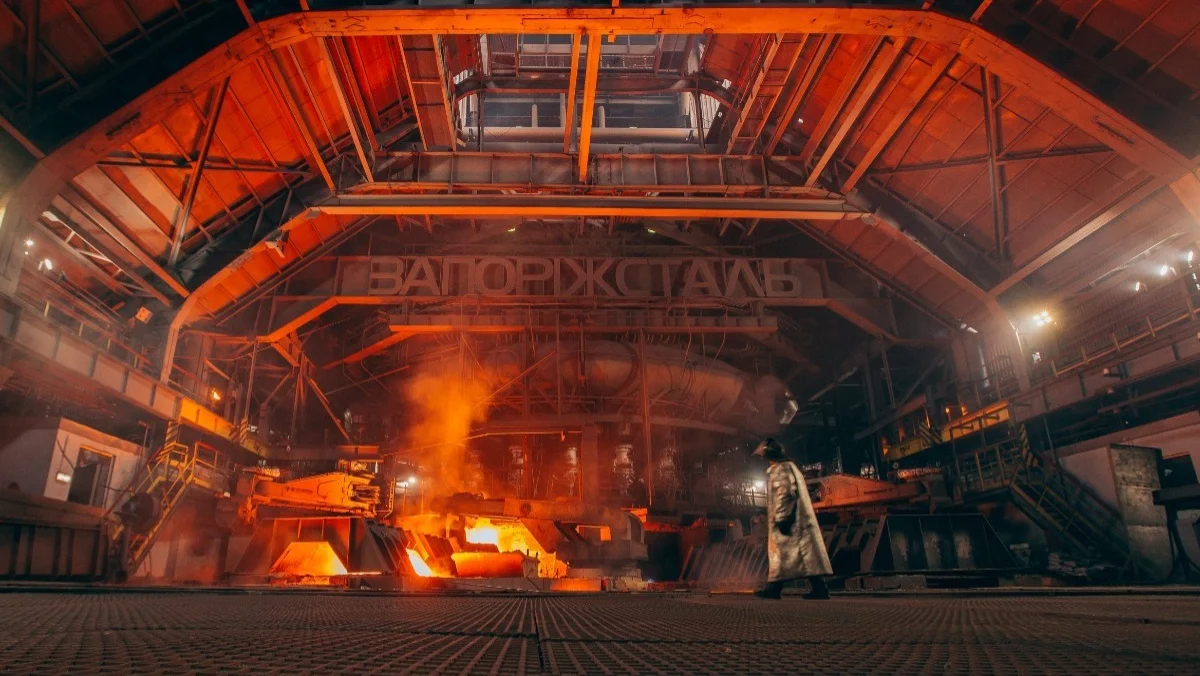
Suspension of activity for 33 days
At the beginning of hostilities, the steelworks had to suspend its activity for thirty-three days. "This has not happened since the Second World War," said Roman SLOBODIANIUK. It slowly resumed operation in April 2022. "The steelworks is currently operating at 70% of its capacity - running three blast furnaces out of four," says the general director. 8,000 employees are working there, compared to 10,000 fifteen months ago. Another thousand workers have been called up, and mobilisation orders are still coming in regularly, says one worker.
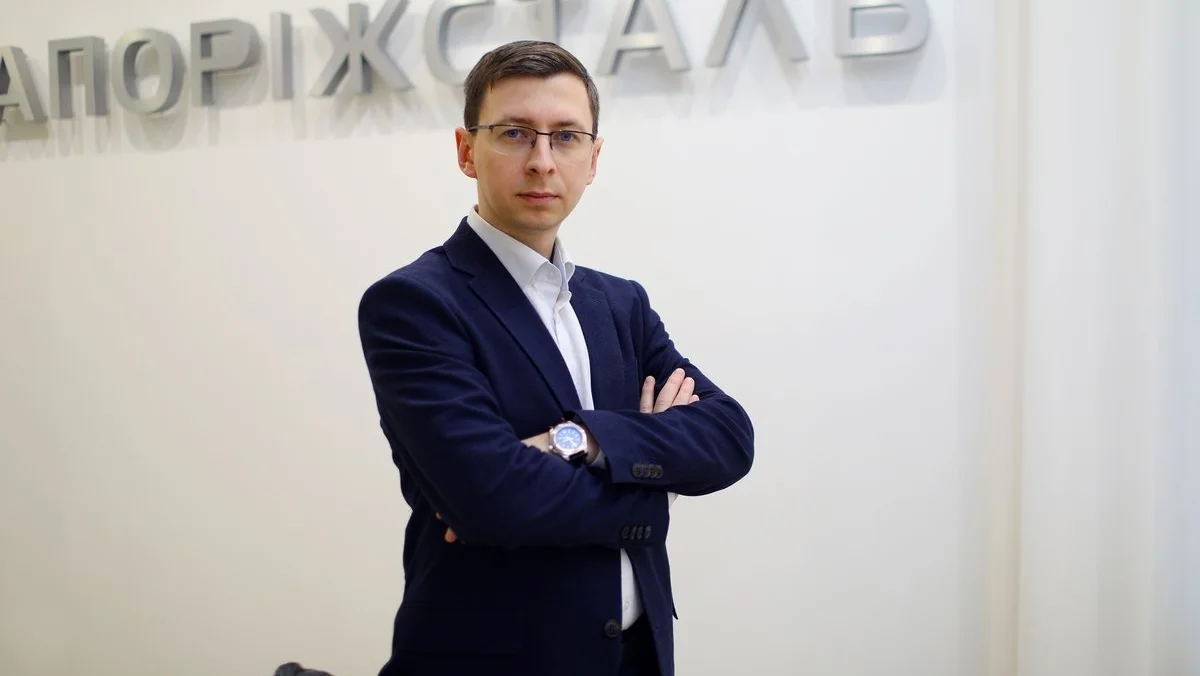
"Since the beginning of the large-scale Russian invasion, everyone's work and life has been turned upside down," says Daria Vremenko, who works in one of the plant's offices. Her husband, who used to work as a crane operator in the hot rolling shop, was called up in the first weeks of the Russian invasion. "He was sent to Izium, in the north-east of the country, where fierce battle were taking place at the time and many people were killed," says the young woman, behind her desk. Her husband, who had been considered missing, ultimately appeared on the list of prisoners. "I know he is alive. Now we are hoping for an exchange," says Daria, who started volunteering to help IDPs and the Ukrainian armed forces.
The owner of the steelworks is contributing to defence
At the same time, Metinvest Group, the owner of the steelworks, is also helping the Ukrainian defence. Rinat Akhmetov's companies have donated UAH 5 billion (EUR 125 million) to support the Ukrainian armed forces and people affected by the war. In particular, he launched the Steel Front military initiative that provides the Armed Forces of Ukraine with equipment, thermal imagers, drones, first aid kits, and fuel.
Several of the group's plants are producing equipment to strengthen the fortifications of the Armed Forces of Ukraine, as well as body armour. "Every tenth Ukrainian soldier is wearing the protective gear manufactured by our group," stresses Roman Slobodianiuk. At the entrance to his office, the general director stops in front of a photo of Zaporizhstal's "big sister", Azovstal, a huge complex that became a symbol of resistance by Ukrainian troops in Mariupol, still intact at the time the photo was taken. Roman Slobodianiuk worked there the day Russia attacked Ukraine. "That was the view from my office," he says. "There is nothing left of it. No one thought then that we would be leaving for good. I still hope that we can return. I am positive about that."
Azovstal survivors
Maksym Notchenko, clad in grey and red work clothes and safety shoes, shares the same hopes. He had worked at Azovstal for eight years before leaving the city under Russian fire and found refuge in Zaporizhzhia. "Our plants are producing steel and other materials, and this provides additional protection to our soldiers and helps them to better perform their mission. I hope this will give them enough strength to go to Mariupol," he says.
Prior to the full-scale Russian invasion, Metinvest's two largest steelworks in Mariupol, Azovstal and Ilyich Iron and Steel Works of Mariupol, produced over 40% of Ukraine's total steel output. Largely because of the destroyed plants and Russian-occupied Mariupol, Zaporizhstal, located 200 km to the west, is trying to overcome the difficulties faced by companies near the combat zones.
Like Maxim, more than a thousand Metinvest employees are Mariupol survivors. But only 120 of them work at Zaporizhstal, a plant that some consider too close to the frontline.