


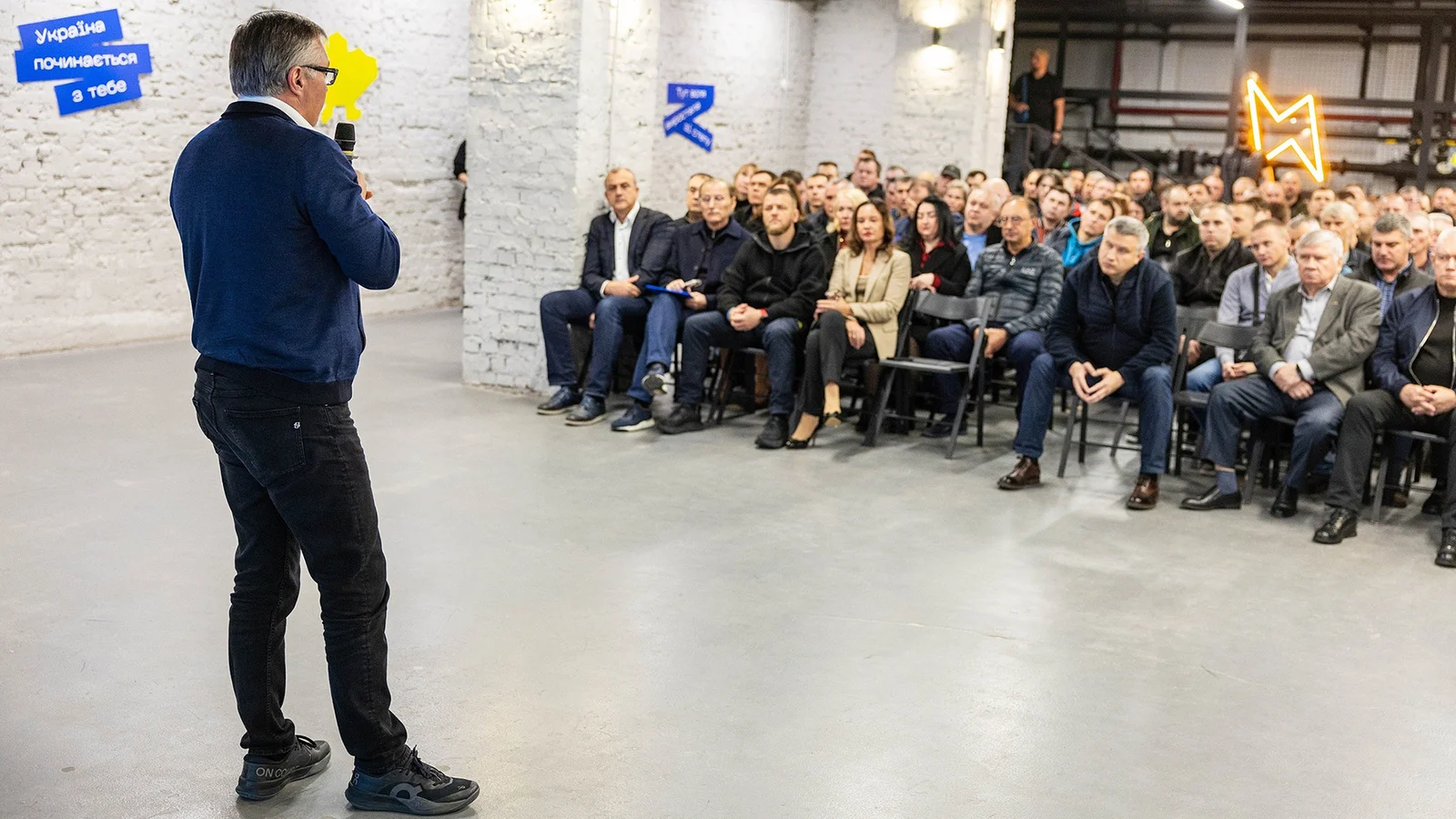
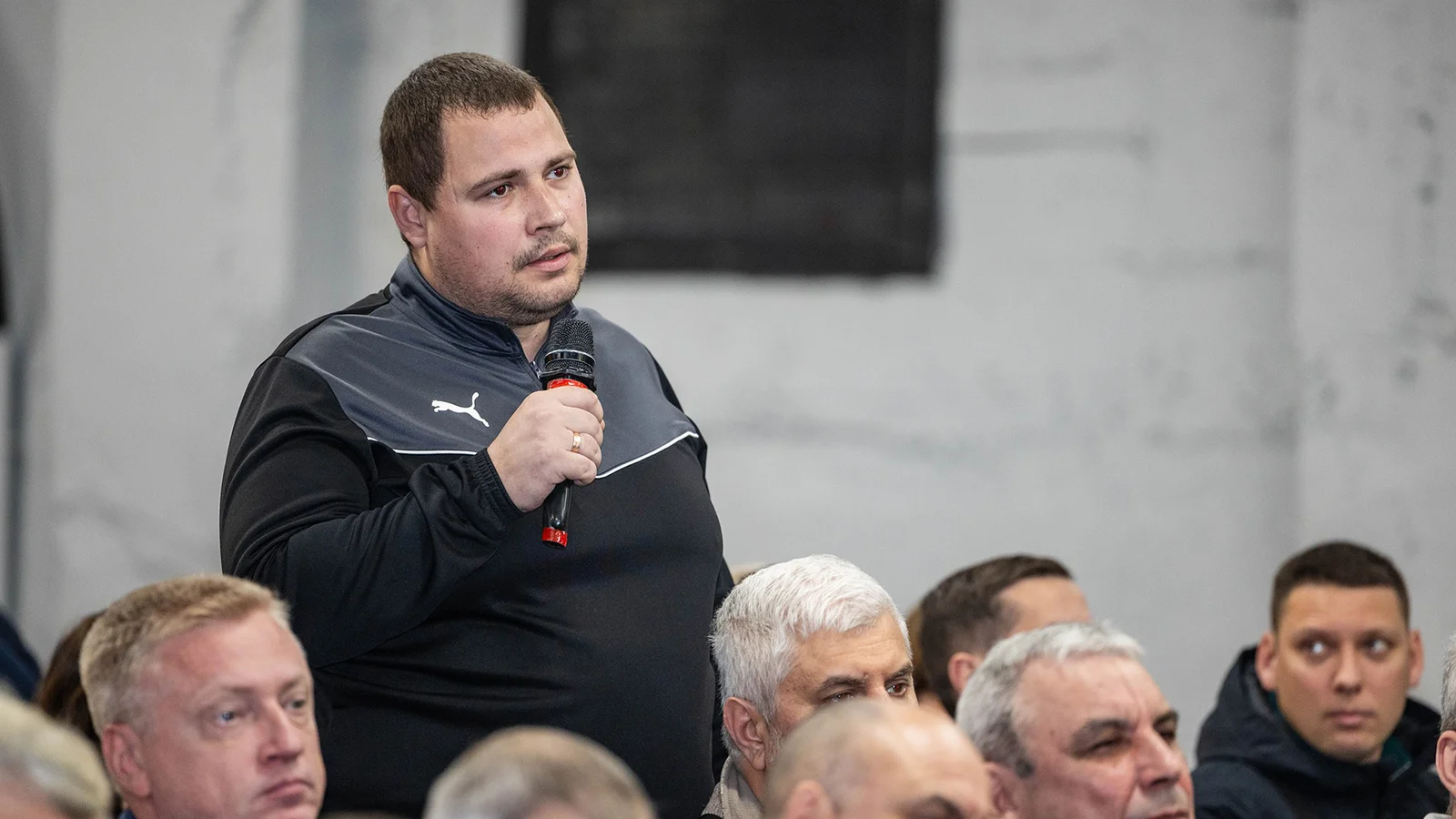
At the end of October, Metinvest CEO Yuriy Ryzhenkov met with employees of Zaporizhstal and Kamet Steel, the steel plants damaged by Russian attacks. He spoke about the key challenges facing the steel industry, the prospects for restoring the facilities, and the anti-crisis measures intended to preserve the business.

External challenges
Metinvest is currently going through the most difficult period in its history. Missile attacks on the steelmaking facilities dealt a major blow to the company's entire production chain. Over the past three months, the enemy has launched 27 ballistic missiles at Zaporizhstal and Kamet Steel. Owing to the significant damage, it is not yet possible to resume normal production operations at the plants.
Among the main external factors putting pressure on the mining and metals industry is the blockade of the Black Sea. Metinvest had to redirect export flow through European ports, which significantly increased logistics costs. Consequently, supplying products to distant markets became economically unviable, and the company’s competitiveness in Europe weakened.
Export constraints have led to a decline in output of steel and iron ore products. Southern Iron Ore JV has been idled, while Northern Iron Ore and Central Iron Ore are operating at less than 50% of capacity.
Another negative factor is the rise in domestic rail freight and electricity tariffs, which increase production costs.
The situation is further aggravated by new EU trade restrictions. In particular, the EU has cut duty-free quotas for imports of Ukrainian steel products almost threefold – from about 2 million tonnes to 670,000 tonnes per year. Starting 2027, Ukrainian steelmakers will also have to pay the CBAM levy. In total, these measures could cost Metinvest almost €700 million in export revenues per year.
Decisions for survival
Metinvest's priority remains preserving the lives and health of its employees. To this end, the company is expanding its network of shelters at its facilities and working to ensure that employees can quickly reach them during air raid alerts.
"Today, our teams are working in extremely difficult conditions. At the enterprises, specialists are carrying out restoration work unlike anything the steel industry has faced before. Our main resource in this struggle is people, their unique expertise and experience, which help to overcome extraordinary challenges. That is why all our anti-crisis decisions are aimed primarily at preserving our teams. After all, without people, it is impossible to preserve the enterprises themselves," said Yuriy RYZHENKOV.
According to him, the company is also looking for internal reserves, optimising business processes and cutting administrative costs.
Restructuring logistics is another area of anti-crisis work.
At the same time, Metinvest, together with the Ukrainian authorities and European partners, is looking for ways to help the industry overcome the crisis. Among such measures is the creation of a fund for the restoration of production facilities after attacks. In addition, steelmakers need government decarbonisation programmes and a moratorium on increases in rail freight and electricity tariffs.
The company is also working with the European Commission to ease trade restrictions on Ukrainian steel products. Given the blockade of the Black Sea ports, the EU remains almost the only sales market available to Metinvest.
Metinvest's management has repeatedly met with European officials to explain that the war has put Ukrainian producers on an unequal footing with European peers and they pose no threat to the latter. The company is seeking to increase duty-free quotas for Ukrainian steel to at least the level of actual exports in 2024-2025, as well as to secure a postponement of the CBAM for Ukraine for the duration of martial law, while maintaining all reporting and emission monitoring requirements. Once the war is over, Ukrainian industry should be granted a transition period of several years for decarbonisation.
Plans for the future
First and foremost, Metinvest must resume operations at the facilities damaged by Russian attacks.
"We hope to restore the production capacity of Zaporizhstal and Kamet Steel after the attacks, bring the plants back to normal operations, and gradually ramp up output. That is why we are already exploring ways to supply products from the plants to external markets," said Yuriy RYZHENKOV.
"We believe that Ukraine's steel industry has a future, and we are preparing for it. However, in wartime conditions, major investments in modernisation take a back seat. We are forced to allocate significant resources to eliminating the consequences of attacks, restoring and sustaining our production facilities," Metinvest's CEO explained.